
Submitted on 10/2025
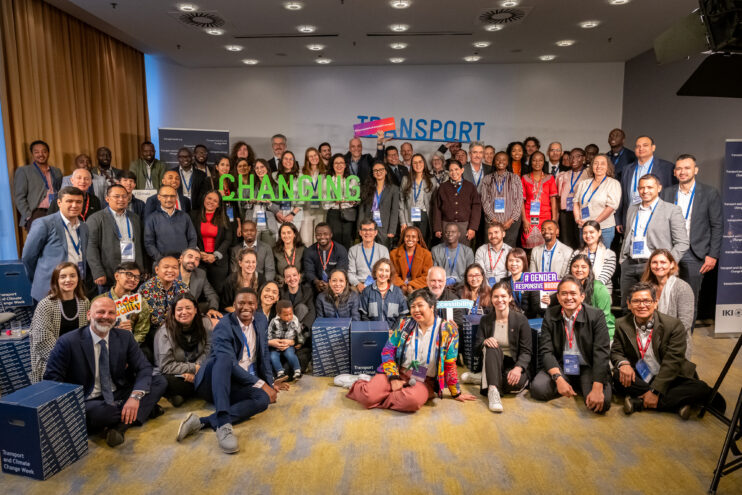
The Global Alliance for Feminist Transport brought feminist perspectives to the forefront at the 8th edition of the Transport and Climate Change Week, the annual flagship event on transport and climate. Under the theme “Time to be Accountable”, the event gathered the global transport community for five days of reflection on progress, challenges, and next steps in aligning mobility with climate goals.
During the session “Moving Equally: An Exchange on Gender Sensitive and Inclusive Transport Solutions” the Global Alliance introduced its Call-for-Impact “No One Left Behind” . The session began with a Walk of Privilege: participants were assigned characters from around the world, each reflecting a different lived experience of mobility. Amina, a nurse and single mother in Nairobi, navigates two-hour matatu rides and walks in the dark while worrying about her children’s safety. Lucas, a queer graduate in Sao Paulo, avoids certain metro lines after being harassed. Fatima, a visually impaired call centre worker in Casablanca, struggles with unmarked crossing and uneven sidewalks. Step by step, some participants moved far, while others barely advanced. Statements such as “If you can move around your city at night without fearing harassment, step forward” or “If you have easy access to reliable public transport near your home, step forward” brought these characters to life, highlighting the profound inequalities in mobility. This simple yet powerful exercise made tangible what data and policy papers often cannot: how safety, accessibility, affordability, and identity shape daily travel experiences.


Following participants’ reflections, the Global Alliance , represented by Women Mobilize Women, shared the Call-for-Impact and its relevance in promoting inclusive mobility. This contribution to the UN Decade of Sustainable Transport outlines ten strategic objectives for embedding gender equity and inclusion in sustainable mobility. Signed by more than 40 organisations, the Call-for-Impact emphasizes the urgency of addressing systemic gaps, such as care trips, affordability, safety and representation, ensuring that climate action also delivers social justice.


Beyond the session, participants joined the #ChampionsforFeministTransport campaign, sharing their perspectives on inclusive and equitable transport. Their photos and quotes created a mosaic of voices, reinforcing a central message: inclusion is not a side note to climate action, it is a driver of its success. By centring gender equity and lived realities, transport systems can accelerate the shift to low-carbon and resilient mobility, while benefiting everyone.


As the global transport community looks toward the UN Decade of Sustainable Transport, the Global Alliance for Feminist Transport will continue advocating for accountability that includes gender-transformative action. The mission is clear: build transport systems that are empathetic, equitable and designed for all journeys, ensuring that no one is left behind.
Watch the Call-for-Impact Presentation