
Research by The Urban Catalysts found that women face barriers across driving training and licensing, charging infrastructure, access to credit, and institutional support. In Delhi, women accounted for only 7% of driving licences issued in 2020 – highlighting how deeply mobility access remains gendered.
Last year, NITI Aayog, with our support issued two circulars directed at state nodal agencies responsible for preparing electric mobility policies. NITI Aayog recommended that state EV policies actively skill, upskill, and reskill women across the EV value chain. It also called for charging stations and EV depots to be designed as safe and accessible spaces for women, with adequate lighting, hygienic toilets, rest areas, and sanitation facilities.
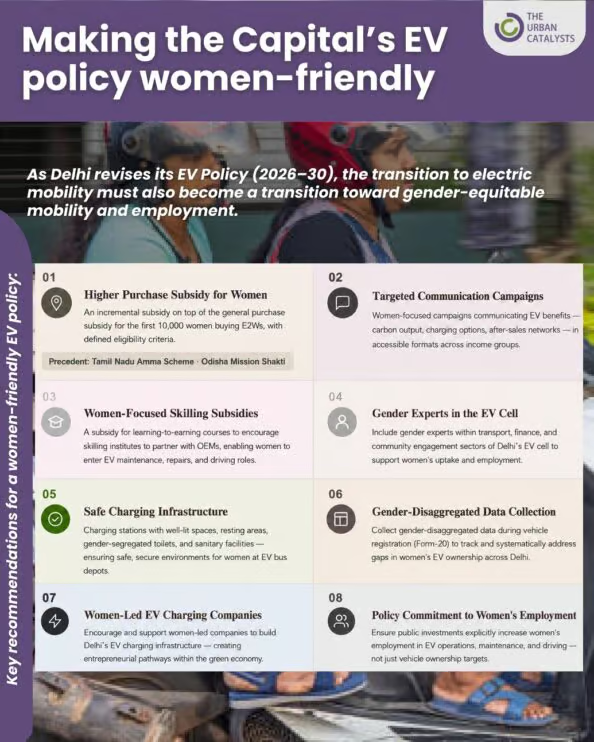
In a recent article in Hindustan Times, lalita panicker featured our research and highlighted key asks that we developed in collaboration with Nehal Gupta for making Delhi’s EV transition gender-inclusive:
✅ 𝐀𝐝𝐝𝐢𝐭𝐢𝐨𝐧𝐚𝐥 𝐄𝐕 𝐩𝐮𝐫𝐜𝐡𝐚𝐬𝐞 subsidies for the first 10,000 eligible women buyers
✅ 𝐖𝐨𝐦𝐞𝐧-𝐟𝐨𝐜𝐮𝐬𝐞𝐝 𝐚𝐰𝐚𝐫𝐞𝐧𝐞𝐬𝐬 𝐜𝐚𝐦𝐩𝐚𝐢𝐠𝐧𝐬 on EV usage, charging, financing, and after-sales support
✅ 𝐒𝐚𝐟𝐞, 𝐰𝐞𝐥𝐥-𝐥𝐢𝐭 charging stations and bus depots with hygienic toilets, sanitary facilities, and rest areas
✅ 𝐖𝐨𝐦𝐞𝐧-𝐟𝐨𝐜𝐮𝐬𝐞𝐝 skilling pathways linked to employment in EV maintenance, repairs, and driving roles
✅ 𝐈𝐧𝐜𝐥𝐮𝐬𝐢𝐨𝐧 𝐨𝐟 𝐠𝐞𝐧𝐝𝐞𝐫 𝐞𝐱𝐩𝐞𝐫𝐭𝐬 within EV governance and implementation structures
✅ 𝐒𝐮𝐩𝐩𝐨𝐫𝐭 𝐟𝐨𝐫 𝐰𝐨𝐦𝐞𝐧-𝐥𝐞𝐝 𝐛𝐮𝐬𝐢𝐧𝐞𝐬𝐬𝐞𝐬 in EV charging infrastructure
Delhi now has the opportunity to ensure that clean mobility is not only greener – but also more inclusive, safer, and economically empowering for women.