
“Engaging citizens from low-income communities in transport planning: experiences from peer research studies conducted in three African cities”, Gina Porter, Bradley Rink, Emma Murphy, Fatima Adamu, Plangsat Bitrus Dayil, Sam Clark, Bulelani Maskiti, Claire Dungey, Ariane de Lannoy.
This paper draws on experience from a series of transport-focused studies built round peer research with community members resident in low-income neighbourhoods at the periphery of three major cities: Abuja, Cape Town and Tunis. These were conducted firstly with young women aged 18–35 in all three cities over a four year period (2019–2022, i.e. spanning the pandemic), followed by a recently completed pilot with young men in the same age group (but in this case restricted to Cape Town).
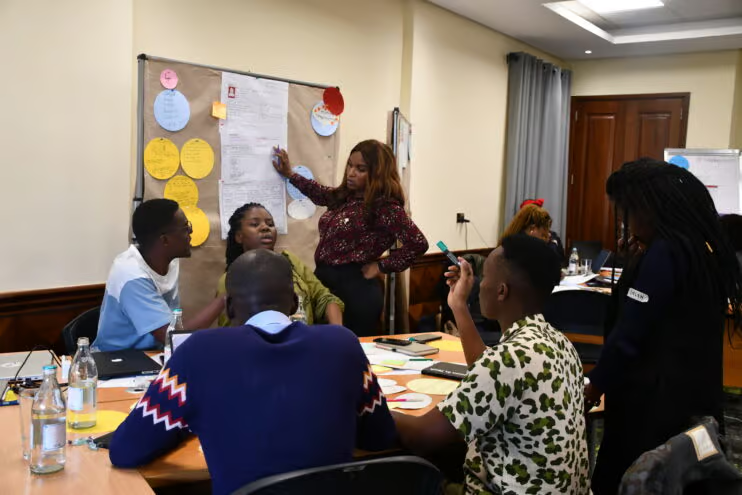
The paper reflects firstly on the peer research methodology employed (including training procedures, ethical issues and context specific challenges/barriers) and the significant field outputs achieved by the groups concerned through their in-depth interviews, participant observation and mobility diaries. It then moves on to consider the engagement of the community peer researchers with city transport professionals and practitioners at our project stakeholder consultative group meetings and their potential for promoting the design of more inclusive, accessible and sustainable transport systems.
While peer researchers’ direct field evidence offers rare insights into the transport and mobility challenges that many marginalised residents of these low-income neighbourhoods experience in the everyday – perspectives that could be crucial to effective user engagement around transport issues in an Urban Living Lab – the actual patterns and potentialities of engagement within each city that might promote a more socially just travel environment are strongly shaped by a range of locally specific factors. These extend from resource and policy contexts set within distinctive local urban geographies, to the personalities and positionality of all actors involved.