
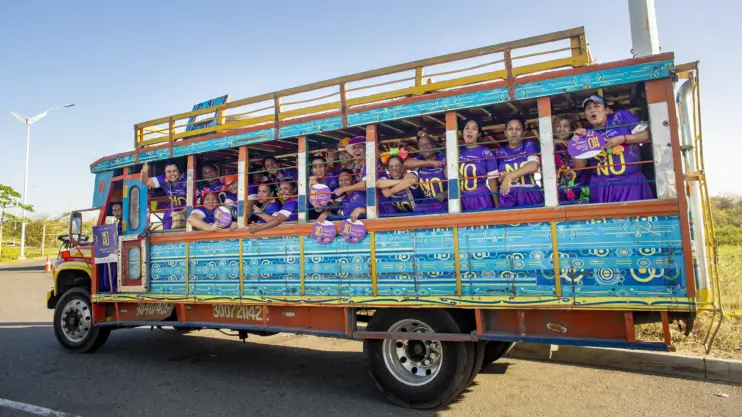
“Fifteen years since UN Women’s Safe Cities and Safe Public Spaces Global Initiative for Women and Girls began, cities around the world are showing how women’s leadership, political will, and practical changes make spaces safer.
A safe city is not only measured by the quality of its lighting, transport, clean streets, or accessible public services. For women and girls across the globe, safety is often measured in smaller, daily decisions:
Which route feels safest during the day and after dark? Can a woman market vendor sell her produce without fear of sexual violence and intimidation? Can girls walk to and from school without being sexually harassed? Can a woman wait for transport, use a public toilet, study, exercise, meet friends, or take part in public life without always having to calculate the risk of violence?
Fear – and experience – of sexual violence affect whether women and girls can move freely through public spaces, earn an income, stay in school, access services in person or online, and join community life.
That is the starting point of UN Women’s Safe Cities and Safe Public Spaces for Women and Girls Global initiative, which began in 2011, supported by the Spanish Agency for International Development Cooperation, and further securing support from other donor partners such as the European Union, the Republic of Korea, Canada, Australia, New Zealand the Netherlands, GIZ, and Poland.
Fifteen years since its inception, the initiative now spans comprehensive programming in 75 cities in 36 countries, involving partnerships with local and national governments, women’s rights organizations, community groups, businesses, and other partners to prevent and respond to sexual harassment and other forms of violence against women and girls in public spaces.
The lesson from those cities is clear: There is no single blueprint. A safe city is not created by one campaign, one law, one bus route, or one redesign project. It is built when spaces for women and girls’ participation are prioritized and their voices are heard. It is also built when women’s lived experiences shape all types of policies, when public spaces are planned with their recommendations, and when communities challenge the idea that sexual harassment is inevitable.”