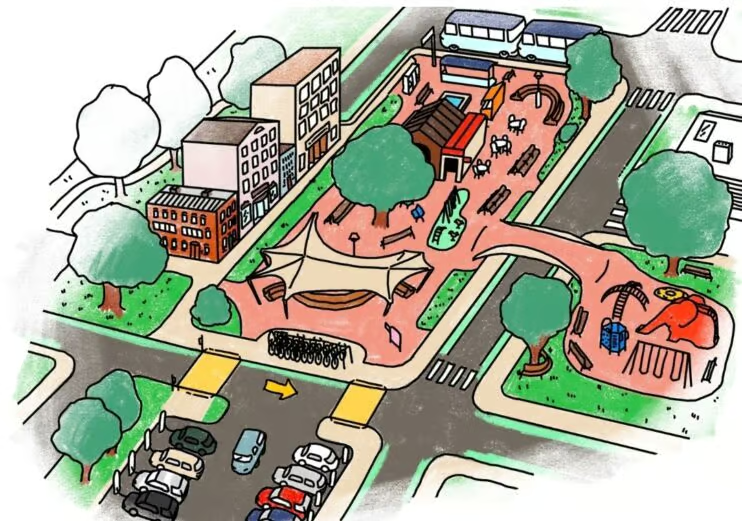
Transportation should work for everyone. Yet, too often, it doesn’t reflect the needs of women and caregivers. If you’ve ever wondered how mobility hubs can serve these groups better, we’ve created resources to help you ask the right questions.
Mobility Hubs Design Framework for Women and Caregivers: An easy-to-use, open-source guide that helps you ask the right questions.
Final Report: A deep dive into the project.
Who Are These Resources For?
Community Leaders: Spark change by framing your advocacy, connecting with your community, and partnering with government agencies.
Planners and Designers: Discover fresh perspectives and ensure your projects meet overlooked needs.
Educators and Students: Explore how thoughtful design can transform transportation systems for women and caregivers.
Why Mobility Hubs?
Mobility hubs—physical spaces where people switch seamlessly between transportation options—are a cornerstone of today’s evolving transportation systems. However, most mobility hubs are built for the “traditional commuter”: someone (often a man) traveling to work on a set schedule during peak hours.
Why Women and Caregivers?
Women and caregivers move differently. They often make shorter, more frequent trips at off-peak times, balancing errands, caregiving, and work. By designing mobility hubs that reflect these patterns, we can create better transportation systems for everyone.
The Shared-Use Mobility Center (SUMC) teamed up with Living Cities and Communities (LCC) to develop a Mobility Hubs Design Framework for Women and Caregivers to bridge this gap. This framework is grounded in research and real conversations with women and caregivers. It introduces seven practical design principles to guide cities and transit operators in building hubs that support women and caregivers’ everyday journeys.
What We Developed
Mobility Hubs Design Framework for Women and Caregivers: An easy-to-use, open-source guide that helps you ask the right questions. It distills key findings, research and ideas into a customizable deck; pull in or out the slides and sections that best support your conversations and meetings.
It summarizes the experience of dozens of women and caregivers—real people with real needs and life stories into personas that walk us through shared perceptions.
Project Final Report: A deep dive into our methodology, community dialogue findings, and recommendations for action.
This is a joint project of Living Cities and Communities (LCC) and the Shared-Use Mobility Center (SUMC).
Future Mobility, supported by Vinnova, the Swedish Innovation Agency, and the Equitable Transportation Fund a project of the Global Philanthropy Partnership provided the funds for this project.